

Neuropsychology
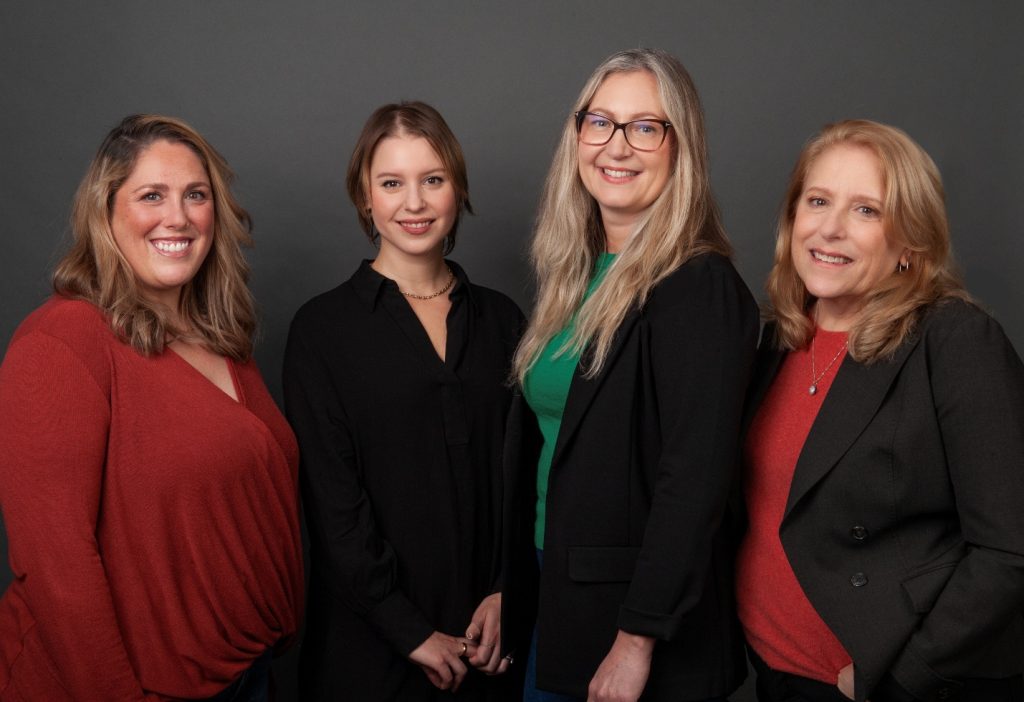
(From left to right)
Dr. Lisa Bolshin, Ph.D., C.Psych.
Clinical Neuropsychologist
Dr. Sylvia Romanowska, Ph.D.
Clinical Neuropsychologist
Dr. Michelle Busse, Psy.D., C.Psych., C-CAT (M/B)
Clinical Neuropsychologist
Dr. Carolyn Lemsky, Ph.D., C. Psych., ABPP-CN, C-CAT (MB)
Neuropsychologist, Clinical Director
Neuropsychological services are available for clients of CHIRS who are experiencing new or ongoing difficulties with thinking, learning, memory or behaviour related to their traumatic brain injury or disease. All services are completed or directly supervised by one of our neuropsychologists. Our neuropsychologists came to CHIRS with extensive training and experience in the field of acquired brain injury (ABI).
Dr. Lemsky has over 30 years of experience in providing rehabilitation and assessment services in medical-legal, inpatient and community-based settings, serving people living with the effects of neurological disabilities. She is a registered Neuropsychologist and Rehabilitation Psychologist and has also been the Clinical Director of CHIRS since 1998.
Dr. Lemsky continues to participate in research and has contributed a number of book chapters and articles to rehabilitation literature. She has a special interest in working with individuals with co-occurring substance use and mental health issues.
Dr. Lemsky is board certified by the American Board of Professional Psychology and American Academy of Clinical Neuropsychology.
Dr. Busse is a registered Clinical Neuropsychologist and Rehabilitation Psychologist with more than 10 years of experience at CHIRS. She specializes in conducting comprehensive neuropsychological assessments with patients who have acquired brain injuries, both for treatment and medical-legal purposes. In addition to her assessment work, Dr. Busse provides clinical consultation and training to the residential and community-based teams at CHIRS, as well as clinical supervision to Neuropsychology practicum students and fellows.
Dr. Bolshin is a registered Clinical Neuropsychologist. She attained her Ph.D. in Clinical Psychology from Fielding Graduate University and conducted her doctoral research at the Rotman Research Institute at Baycrest Health Sciences. After completing her pre-doctoral residency at Saskatoon Health Region in the areas of Rehabilitation Health Psychology and Neuropsychology, she completed two years of post-doctoral supervision in Clinical Neuropsychology at CHIRS.
Dr. Bolshin joined the CHIRS team in 2017. She provides clinical neuropsychological services at CHIRS as well as supporting the development and implementation of clinical groups designed to teach emotional regulation and mindfulness skills. Her clinical practice includes Cognitive Behavioral Therapy, Dialectical Behavior Therapy, Mindfulness Meditation, and integrating other evidence-based methodologies as needed. She provides clinical consultation to clients and staff in long-term supportive housing residences, as well as brain injury organizations that extend throughout rural communities in Ontario. Dr. Bolshin’s practice areas are in clinical psychology and neuropsychology across all adult ages (18-90+).
Dr. Romanowska completed her doctoral training in clinical psychology at the University of Toronto. She subsequently completed her clinical residency at Vancouver Coastal Health in Vancouver, BC, focusing on assessment, cognitive intervention, and psychological treatment in neuropsychology, rehabilitation, psychiatry, and health psychology settings. She is currently a post-doctoral fellow at Community Head Injury Resource Services, where she is involved in neuropsychological assessment, neuro-behavioural and cognitive intervention, and clinical consultation.
Consultation
Our Neuropsychologists are active participants in regular team meetings, program planning and staff training. Each residential unit has regular, designated consultation time during which program plans are created and modified. Staff are assisted in understanding the complex relationships between an individual’s injury, history, personality, and the environment. Often, time is spent seeing individual clients and providing direct supervision and being a role model for staff in interactions with clients. The goal of consultation is to ensure that each CHIRS client has a program plan that includes personally relevant goals, strategies for intervention that are appropriate for the individual’s strengths and needs, and provision of services that foster community integration and personal growth. To that end, staff are provided with mentoring that is intended to increase their ability to work with individual clients as well as their commitment to providing consistent, high-quality service to persons living with acquired brain injury.
Neurobehavioural Evaluations
When there are concerns about behaviour or cognitive abilities, but it is unclear how to proceed with services, a neurobehavioural evaluation may be requested.
This evaluation consists of an interview with the person receiving services and others who may have an interest in their care. Areas assessed may include behavioural, emotional or cognitive difficulties.
The interview session may include a brief evaluation of cognitive functioning. Outcomes resulting from the evaluation may include specific recommendations for treatment or suggestions for further evaluation.
Neuropsychological Evaluations
Understanding the nature of an individual’s difficulty with thinking, learning and memory is often necessary in order to make appropriate plans for care and rehabilitation. Neuropsychological evaluations may be requested by a professional in order to keep track of cognitive changes during the early stages of recovery from an illness or injury, or to plan for a change in care, work or independent living.
Neuropsychological testing is the process of evaluating difficulties in learning, memory, language, problem-solving, attention, visual-spatial, fine motor and academic skills using standardized procedures.
Tests are conducted individually by Dr. Busse, Dr. Lemsky, or a technician under their supervision over the course of a two to six hour session. In most cases, testing is conducted in a single appointment. After testing is completed, the neuropsychologist will review the test results and write a summary report. A feedback session is scheduled to review the results of the evaluation as well as recommendations for follow-up care.
Individual Psychotherapy
Individual psychotherapy is offered to a limited number of individuals. Clients who are referred for psychotherapy are interviewed to ensure that their goals are likely to be met by individual therapy. Interventions typically address adjusting to life post-acquired brain injury, behavioural self-management, and anxious and depressed mood. Sessions are generally conducted weekly or biweekly for fifty minutes per session. Sessions are adapted to meet the cognitive, emotional and behavioural needs of the client and may include support persons who can assist the client in using skills or completing assignments between sessions.
Group Therapy
Groups provide the opportunity for learning social skills, increasing awareness of strengths and needs and providing social support. Groups are formed when a number of individuals with like needs are identified. They are generally one– and one-half hours in length and are supervised or co-led by one of our neuropsychologists.
Behaviour Therapy and Cognitive Rehabilitation Consultation
When behavioural or cognitive difficulties are interfering with an individual’s ability to benefit from care, consultation with a neuropsychologist may help to clarify goals for treatment and provide recommendations for the provision of services and is available to all CHIRS’ residential and community programs to assist in the formulation of plans for individuals’ behaviour therapy or compensation for cognitive impairments.
For more information on Neuropsychological Services on a fee-for-service basis, please contact the CHIRS Intake Department.
Dr. Chanth Seyone, M.D., FRCPC
Neuropsychiatrist
CHIRS’ Neuropsychiatric Services are offered by Dr. Chanth Seyone and his team at the Acquired Brain Injury Clinic. These services are only available to clients who are receiving Community Outreach or Residential Support Services at CHIRS.
Specialized neuropsychiatric services are provided to individuals who have sustained a brain injury through the unique collaboration of the Acquired Brain Injury Clinic and Community Head Injury Resource Services of Toronto (CHIRS). These neuropsychiatric services address the complication of psychological and psychiatric disorders affecting some individuals who have sustained a brain injury.
Dr. Seyone offers a focused and multi-disciplinary approach to assist individuals who have experienced a brain injury. Individuals are assessed and may be provided with long-term treatment for chronic and disabling post-brain injury psychiatric manifestations. Where appropriate, families are included in the assessment and the ongoing treatment of the individual.
Dr. Seyone also provides on-site education and guidance to CHIRS staff via regular attendance at residential team meetings, in-house neuropsychiatric clinics and on-call support. In addition, he lends his experience and expertise in the development and implementation of CHIRS’ programs and services. As a participant in CHIRS’ Ethical Review Committee, Dr. Seyone provides the neuropsychiatric perspective for CHIRS’ clinical and practical standards.